
Entering 2026: Without Borrowed Orientation
Author’s Note: Entering 2026: A Note on the Following Reflections
We often approach a new year by looking for a new map, a clearer forecast or a more robust plan. But as we enter 2026, many of us sense that the maps themselves have thinned. The narratives we once borrowed to make sense of our effort and direction are no longer arriving intact.
The two essays that follow are intended to be read together. The first, Without Borrowed Orientation, is a diagnostic. It names the quiet fatigue of acting without a sustaining story and identifies the shift from institutional clarity to personal custody.
The second, Faithful Leaning, is formational. It moves from the conditions of our world to the posture of our lives. It explores how we might remain committed without hardening into the kind of certainty that forecloses our ability to be truly addressed by the year as it unfolds.
Together, these essays are an invitation to move forward, not because the path is clear, but because we are learning to meet the ground as it appears.

I frequently write about orientation, about how human beings locate themselves in time, responsibility, and possibility. Dimensions of Strategic Orientation and How We’re Orienting to the Future are two recent explorations of that terrain. Each approached orientation not as a decision we make once, but as something that shapes how we interpret effort, risk, and meaning long before we become conscious of it.
Much of our orientation, without our noticing, is borrowed.
I want to enter that same space again here, not by asking how we should orient ourselves toward the coming year, but by noticing how we are already oriented now. As we face 2026, much of what organizes our sense of direction lives in the background of our lives, absorbed from prevailing narratives, ambient urgency, institutional rhythms, and the constant noise of explanation surrounding us. Much of our orientation, without our noticing, is borrowed.
What follows is not about what to do next, nor a call to adopt a new posture. It is an attempt to bring that background into view. Before plans, before resolutions, before resolve, there is another question pressing in on our lives. What is the ground we are standing on as we move forward?
Much of the public conversation surrounding the coming year assumes that orientation is still available if only we search hard enough through better forecasts, clearer narratives, or renewed confidence in existing systems. Yet many people sense that something more foundational has shifted, not because institutions have stopped functioning (and some have), but because our participation no longer carries meaning in the way it once did.
The economy, in particular, continues to operate, but increasingly without a narrative that can orient how people understand their efforts, their risks, or their place in what is unfolding. That story was never just economic; it was also the background confidence that if we participated faithfully across the various domains of our life; then our lives would make sense over time.
We still see that work demands time and attention. Relationships still require commitment and decisions are still made, often under pressure. Yet the connection between participation and purpose feels less secure, less self-evident. People are not withdrawn because they no longer care, but because the narratives that once carried effort forward no longer seem intact.
Orientation Under Pressure
Urgency has moved in to fill the gap. Speed, scale, and momentum are treated as substitutes for direction. Things move, sometimes rapidly and impressively, but movement itself is taken as evidence of meaning. Action becomes continuous, while orientation remains unresolved.
Speed, scale, and momentum are treated as substitutes for direction.
In this environment, calls to act wisely often arrive stripped of their original purpose and grounding. Wisdom is reduced to cleverness, optimization, or foresight. It is measured by responsiveness rather than discernment. What is being asked of people now is not simply better decision making, but the capacity to act without the cover of inevitability; without the assurance that history, systems, or progress will justify the choice in advance.
Responsibility no longer arrives secured by scale, institutional momentum, or historical direction. It is not justified in advance by progress or necessity. Like the moment when a decision cannot be delayed but no option feels clearly right, there is no cover to stand behind. Acting still matters. Not acting does too. Responsibility is experienced less as clarity than as exposure, less as certainty than as consequence.
This shift unmoors many of the assumptions that once allowed participation to feel stable. When actions could be justified by alignment with growth, efficiency, or institutional mission, responsibility felt distributed. Today, those justifications carry less weight. Decisions land closer to the person making them. Consequence feels nearer. Orientation, once inherited, must now be held.
It is here that many people experience a different kind of fatigue. Not burnout from doing too much, but exhaustion from acting without a story that can carry meaning forward. Effort continues, but its orientation no longer feels secure. Participation persists, but its significance feels “less than enough.”
In response, some retreat into personal conviction, others into moral certainty, others into speed. Each offers a form of relief. None restore orientation. Conviction can harden into closure. Certainty can foreclose listening. Speed can mask the absence of direction.
What is missing is not activity, but custody. We have spent years operating under "management” the belief that if we optimize the process, the meaning will take care of itself. Custody is different. It is the willingness to own the space between a decision and its outcome, even when no institutional narrative guarantees that the outcome will be "right." To take custody is to stop asking if a choice is "productive" by the old standards and start asking if it is truthful. It is the shift from being a passenger in a story written by others to being the one who holds the pen in a room where the lights have gone dim.
What is missing is not activity, but custody.
Acting under these conditions requires a different relationship to wisdom. We are moving away from wisdom as foresight; the clever attempt to outguess the future, and toward wisdom as attentiveness. This is slower, more exposed work. It does not reward decisiveness for its own sake, nor does it offer the cheap comfort of "data-driven" certainty. Instead, it asks us to look directly at the people and tasks in front of us, unshielded by the slogans of "growth" or "necessity."
This is why entering 2026 feels different from simply planning for it. Planning is an exercise in control; entering is an act of presence. The challenge is not to predict the coming volatility, but to develop the posture required to remain answerable to it. Without a borrowed orientation, our speech must become more careful and our commitments more local. We stop trying to solve the "global" exhaustion and start taking custody of the immediate ground we stand on.
Crossing into 2026 will not resolve these conditions. The "thinning of the cover" is not a temporary fog; it is the new climate. The question, then, is not how to rebuild the crumbling structures of borrowed meaning, but how to move with integrity when the scaffolding is gone. We find our orientation not by looking at the map, but by feeling the weight of the compass in our own hands. How we carry that weight—deliberately, honestly, and without the need for an audience is exactly what will define the path on the other side.
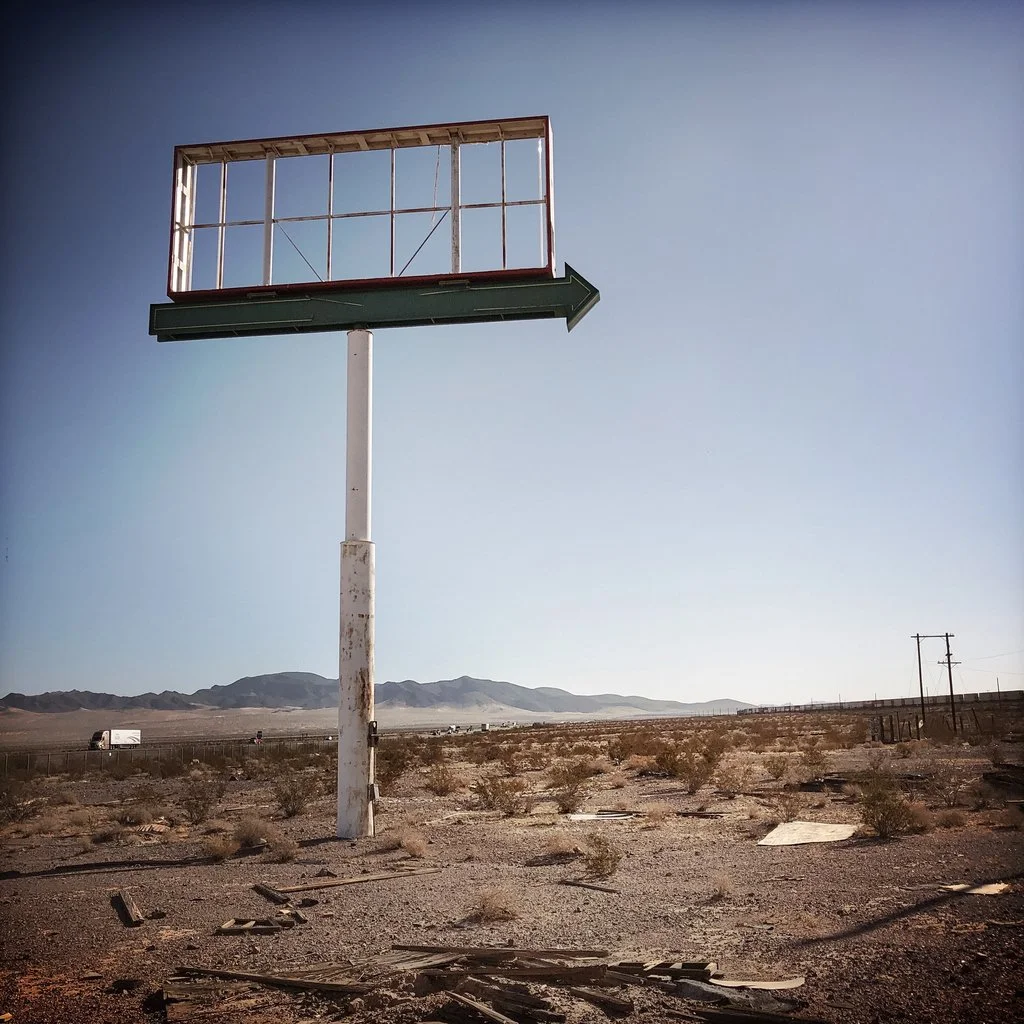
Entering 2026: Faithful Leaning
As we approach a new year, there is a familiar pressure to decide in advance who we will be and what we will do. We are encouraged to set intentions, establish goals, and clarify direction, as if orientation were something we could choose once and carry forward intact. There is comfort in that assumption. It suggests that steadiness comes from resolve, and that clarity precedes action.
But many people are discovering that this no longer matches their experience. Even with the best intentions, orientation does not seem to hold in the way it once did. Commitments made in good faith are interrupted by conditions no one anticipated. Questions we thought were settled return in new forms. The ground keeps shifting beneath plans that were carefully made.
Orientation does not fully exist at the level of intention. It emerges under demand.
Faithful leaning begins here, not as an alternative to commitment, but as a recognition that commitment itself now unfolds under exposure. To lean faithfully is not to hesitate or wait for certainty. It is to remain engaged without demanding that the future justify itself in advance. It is to keep moving forward while allowing ourselves to be addressed by what actually arrives.
This distinction matters, because orientation does not fully exist at the level of intention. It emerges under demand. Many of us have experienced this directly. We set a direction with care, only to discover that when circumstances press, the posture required of us is different than the one we imagined. What we thought was orientation turns out to be aspiration. Orientation arrives later, shaped by pressure, consequence, and responsibility we could not have foreseen.
This does not mean intention is meaningless. It means intention is incomplete. Leaning into the future is part of what it means to be human. We plan, we commit, we project ourselves forward. But something else is required alongside that movement: the willingness to remain answerable when reality refuses to conform to our expectations.
Faithful leaning names that posture. It holds together three things that are often separated. We lean, because life asks us to move. We commit, because refusing commitment would make us inert. And we remain answerable, because the world we are entering is not the one we imagined in advance.
Planning assumes a measure of control. It organizes effort around prediction. It depends on the reliability of the map. Preparation is different. Preparation does not seek to eliminate uncertainty. It cultivates the capacity to meet it. Planning asks whether the route is clear. Preparation asks whether the one who must navigate it is ready. Where planning focuses on aligning actions to a projected future, preparation shapes the person who will be required to respond when projection fails.
This is not patience as delay, nor waiting as withdrawal. It is attentiveness practiced in advance. It is the work of forming judgment, restraint, and courage before they are demanded. Preparation is not passive. It is how readiness takes shape without pretending to know what it will be used for.
Entering 2026 in this way asks us to resist two temptations. The first is the temptation to close ourselves prematurely, to harden into certainty so we do not have to feel exposed. The second is the temptation to withdraw, to treat uncertainty as a reason to suspend responsibility. Faithful leaning refuses both. It stays open without becoming unmoored. It stays committed without becoming rigid.
This is why faithful leaning is not a technique or a strategy. It cannot be optimized. It cannot be measured by speed or decisiveness. Its integrity is revealed only over time, as demands appear and responses take shape. Often, it is visible only in retrospect, in the recognition that we remained present when it would have been easier to protect ourselves.
We move forward not because the path is clear, but because we are present to the ground as it appears.
As the year approaches, we will be asked to act. Some demands will be clear. Others will arrive without explanation. Faithful leaning does not promise that we will recognize the right response in advance. It promises something less obvious and more demanding: that we will remain available to what is asked, without abandoning what we have already committed to carry.
This is not a dramatic posture. It does not seek an audience. It is practiced in ordinary decisions, in conversations that do not announce their significance, in responsibilities that cannot be deferred. Its strength is not in certainty, but in endurance.
Entering 2026 this way does not resolve uncertainty. It accepts it as a condition of faithfulness. We move forward not because the path is clear, but because we are present to the ground as it appears. That presence, sustained over time, is what allows orientation to emerge.
Deeper Dive:
Readers who want to stay with the conditions described in Entering 2026 Without Borrowed Orientation may find The Age of the Unthinkable by Joshua Cooper Ramo to be a helpful companion.
Ramo does not treat uncertainty as a temporary disruption to be managed away. He names it as a durable condition of our time, one in which prediction, scale, and inherited frameworks increasingly fail to provide reliable orientation. That framing closely parallels the experience described in this essay, where leaders find themselves responsible without the benefit of borrowed certainty.
The book is not a guide for what to do next. Instead, it helps readers recognize why familiar sources of direction no longer hold, and why leadership now requires judgment formed in conditions where clarity cannot be assumed in advance.
Next Up:
I've waited to publish Entering 2026 Without Borrowed Orientation until the familiar language of new beginnings had quieted. Not because beginnings don’t matter, but because they so often arrive wrapped in borrowed confidence and ready-made resolve. What our next few essays challenge is something different: this moment does not ask for reinvention, but for the capacity to remain responsible when optimism fades, when inherited frames no longer reassure, and when clarity cannot be summoned on demand. That is where the next movement of this work begins.
The Craft of Leadership is not a response to the calendar, nor a program for the year ahead. It is an inquiry into what leadership requires when orientation must be earned rather than assumed, and when responsibility persists without the comfort of resolution. It begins not with ambition or strategy, but with the disciplines that allow a person to stay with the work over time.
The essays that follow will move slowly and deliberately. They are meant to be studied, returned to, and lived with. Not as guidance for a season, but as formation for what comes after enthusiasm has passed.
Stay Connected: Subscribe to the Newsletter, and follow me on LinkedIn.
Copy the link below to share the page with your friends.
thepivotmind.com/blog/entering-2026-without-borrowed-orientation
With gratitude and anticipation,
John Henderson
Founder, The Pivot Mind
